

The Appraisal That Changed My Life
We are now on the final countdown to the big, as its a week today, and the #AdventBlogs are still going strong. Today’s is from Gary Butterfield and is connectable via - https://www.linkedin.com/in/garybpt/ Gary, also known as “that lad from Yorkshire”, is the Founder of the Leeds-based consultancy, Joy Junction. Through his work, he supports organisations to create more joyful workplace cultures by increasing engagement in wellbeing programmes without increasing budget.
He focuses is blog on the appraisal that changed my life, and I am someone who is only doing my role due to a chance appraisal that shaped me and my life., so heartily support this brilliant blog. Over to Gary.
I started my career in the fitness industry, working for a very well-known brand.
I loved it; the clients, the energy, and those small daily wins that made people feel proud of themselves and excited about what they could achieve.
For a while, I thought I’d found my forever career. That this was where I was meant to be.
But over time, something felt slightly off. I cared deeply about the people I supported, and I knew I was good at the job, yet I couldn’t shake the sense that my own contribution wasn’t really seen.
That feeling came to fruition during my first appraisal. I walked into that meeting with my line manager ready to talk about my development, the impact I was having, and the things that mattered to me. Instead, we worked through a spreadsheet.
KPI after KPI. Revenue, sales, conversion rates.
There wasn’t a single question about me, my growth, or what I wanted. No reflection on the difference I was making to members, my colleagues, or the organisation. Just sales figures.
I left that meeting feeling deflated. The next day, with no plan and nothing lined up, I handed in my notice.
I didn’t leave because I didn’t love the work; I left because I felt invisible. As if I were a small cog in a much larger machine that could be replaced at any moment.
At the time, I wondered whether I was the problem. Maybe I was too sensitive or expected too much. But over the years I discovered my experience was far from unusual.
The pattern I couldn’t ignore
When I began working in organisational culture and wellbeing at The University of Sheffield, and later as a consultant across industries, I started seeing the same themes everywhere.
People who genuinely enjoyed their work but didn’t feel fully recognised. Teams who wanted to support one another but weren’t always sure how. Managers doing their best but relying on systems and processes that seemed stuck in another era.
The data mirrors this reality. Poor mental health costs the UK economy between £74 and £99 billion each year. Presenteeism alone accounts for another £24 billion.
And with around 82% of UK managers stepping into leadership roles without formal training, it’s unsurprising that a quarter of employees feel their job negatively affects their mental or physical health.
When our conversations prioritise metrics over meaning, we unintentionally lose the humanity that allows people to thrive.
This isn’t about playing the blame game; it’s a reminder that, as people professionals, we have a responsibility to create something better.
The moment everything clicked
A few years later, I was delivering a session on the Five Ways to Wellbeing for a client’s senior team and managers. There were around sixty people in the room.
In the middle of the session, I asked a question:
“By a show of hands, how many of you have had a poor experience with an appraisal at some point in your career?”
Around 70% of the room raised their hands. Seventy percent!
Their stories mirrored mine. As I travelled home, I kept thinking about all those hands in the air and what they represented.
Surely there had to be a better way. Surely something as important as an appraisal, a process designed to help people grow and succeed, could be done differently, with more care and connection.
That train journey was where the idea for the Conversation Canvas first took shape.
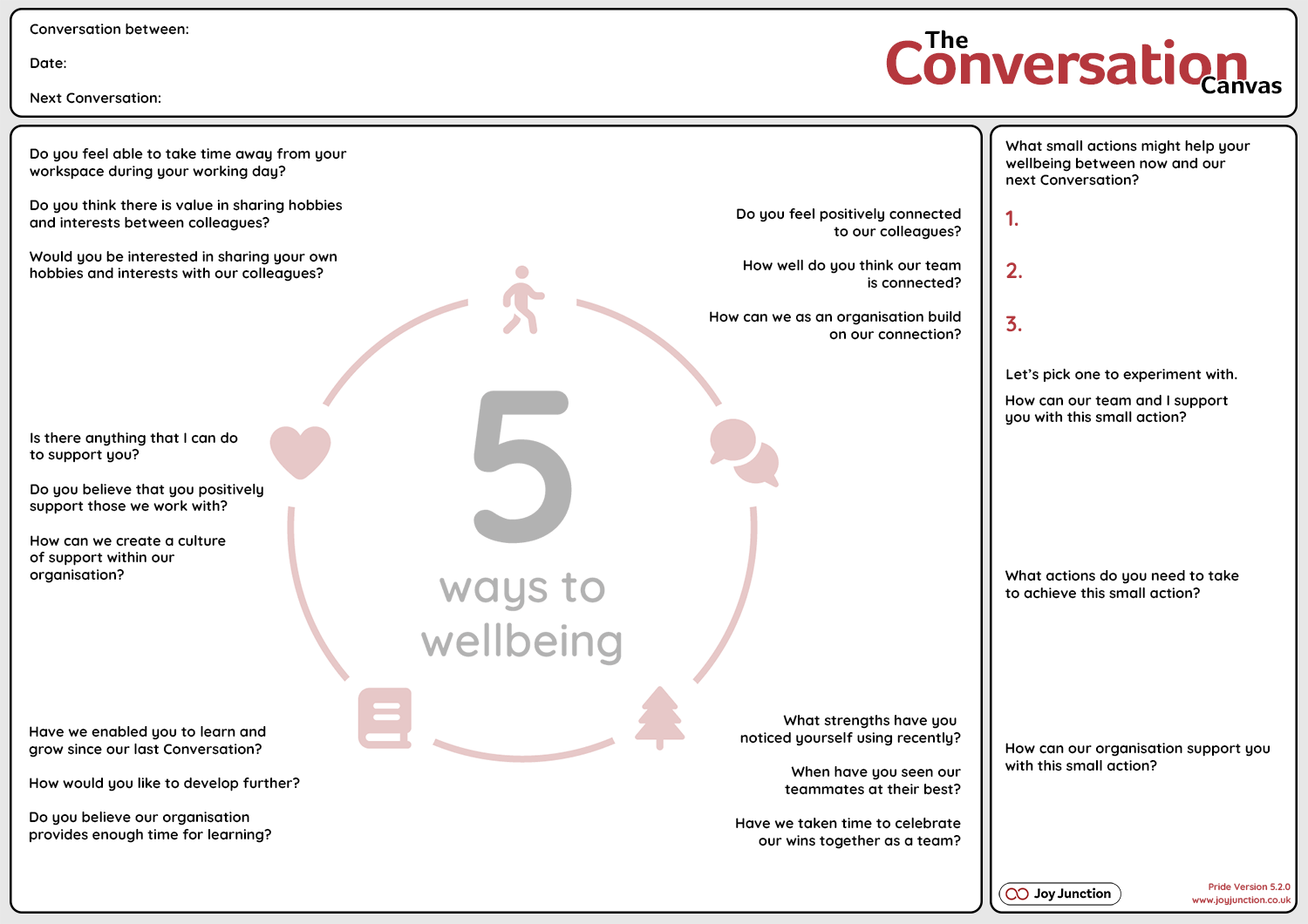
The Conversation Canvas - 5 Ways to Wellbeing
From frustration to framework
Psychological safety, the feeling that it’s okay to be human at work, is the most significant driver of high-performing teams. High belonging alone is linked to a 56% increase in performance and a 50% reduction in turnover risk.
The Conversation Canvas began as a rough sketch in a notebook, on the train somewhere between Leicester and Leeds. It has since grown into a free, simple, human-centred tool used by managers around the world to support more meaningful conversations.
It’s time to change
If there’s one thing those early experiences taught me, it’s that thriving organisations depend on people feeling valued, not just managed.
So here’s a gentle challenge. Where in your organisation could a little more humanity make a meaningful difference?
People rarely leave a job because of the process itself; they leave because of how that process makes them feel. Every conversation has the potential to change that; to be a catalyst for connection, clarity, or confidence, if we choose to make it so.
If you’d like to download the Conversation Canvas for free, you can find it at https://www.joyjunction.co.uk/resources
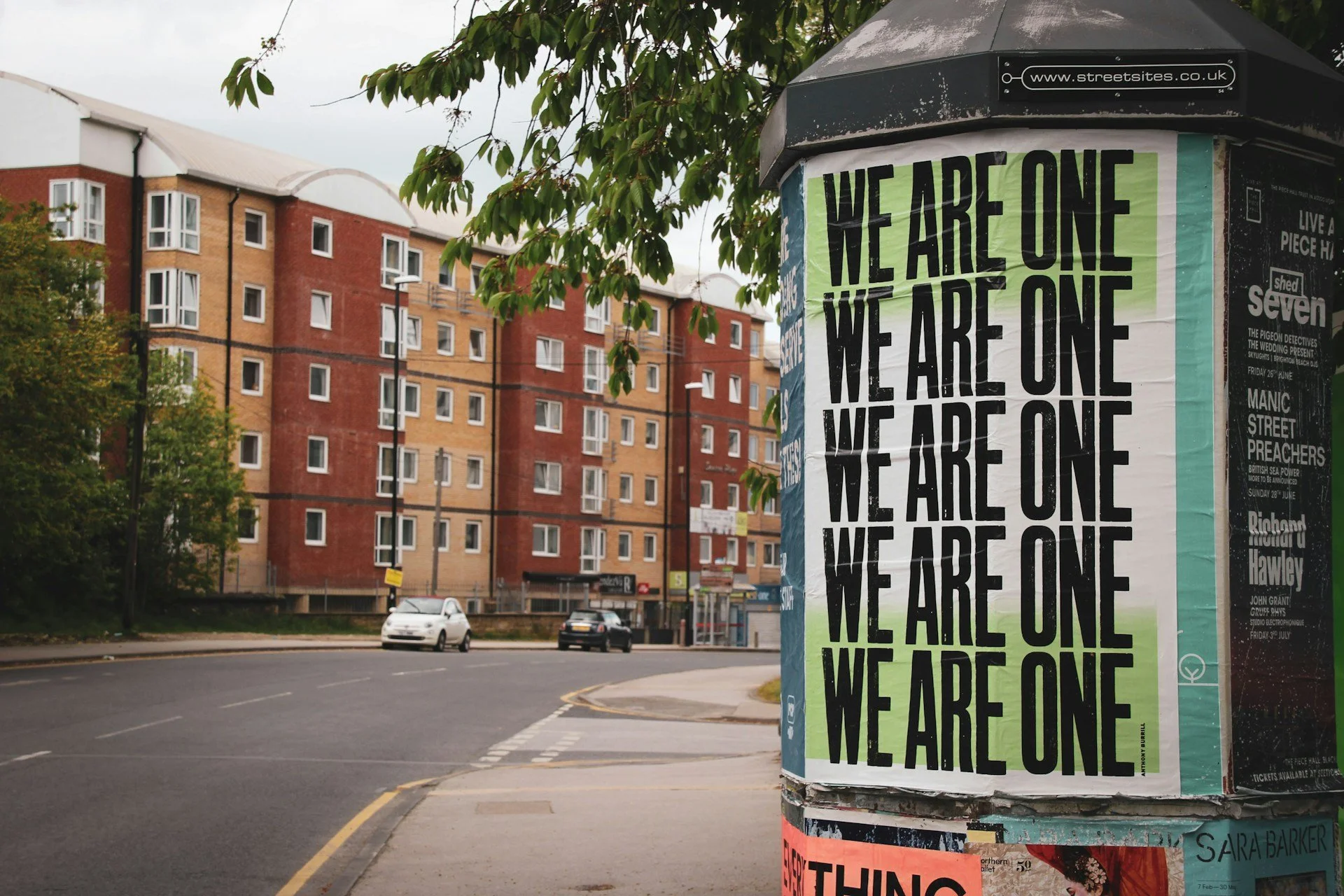
Photo by Gary Butterfield on Unsplash