

Of Mice and The Season
It’s the start of the last few days in work for many, ahead of the big day and I am surrounded by glittering lights, mince pies and wearing my Christmas jumper, and feeling more and more festive.
Today we are joined by Chris Nichols who is the co-founder of GameShift, and Hon Visiting Professor at Cardiff. He was previously a director of Ashridge Consulting, He’s written numerous books, chapters and articles. Chris lives on Dartmoor and is a walker, runner and artist. Chris has written for #AdventBlogs in the past and I am thrilled he has done one for me this year, so over to Chris.
It’s that time again. The time when folks who usually can’t bear mice turn to them in Christmas tales. From sugar mice on a tree, to one eating the organ bellows, Christmas mice have been silently helping the seasonal world turn out right for decades. We love stories of tiny creatures spreading humble cheer and finding comfort among the crumbs.
There’s something in this, I think. I’ve been in consulting for 35 years and, like you I expect, have seen plenty of strategy and change initiatives in the form of grand gestures. The everything-must-change corporate renovations, the never-ending rounds of “another CEO another strategy”. These are the big bang episodes of change.
Although the world seems fond of “strong leaders”, and more so now than at any time in the past generation, the future isn’t in their control because it never really is.
Fireworks and fanfares focus attention and grab headlines, but we all know they’re not how change happens really.
For the last twenty years, at Ashridge Consulting and more recently in GameShift, I’ve been a supporter of “trojan mice”. These are the powerful weavers of our corporate fabric, the makers of everyday interventions that shift things one conversation at a time, one experiment after another. In a world of complexity, look to understand the trojan mice more than the generals on the hill, but watch out for generals crushing the mice because general tend to have bigger boots.
All of us working to support a vibrant and healthy organisational life neglect trojan mice at our peril because it’s where stuff happens. The highest levels of organisations often forget that change happens in the invisible world, underground, in the whispers.
A large part of our work at GameShift is in stopping the very top of organisations from setting the mouse traps, deliberately or inadvertently. Sometimes we challenge the grand gestures and make sure someone is nurturing local explorations and the collective sharing on insights. Sometimes our role is to speak truth to power and point out where things won’t work. It’s not always popular, and sometimes we get shown the door, but lauding empty or pointless gestures isn’t our work, we’re more in the business of connecting trails of crumbs.
What this looks like in practice is listening hard for stories of where things are working and where they aren’t, where workarounds are producing more impact than the “strategic investments”, and where unheard voices are yielding more insight than corporate comms. It’s about supporting local initiatives that produce “strategies in action” and protecting these of unheard voices so that corporate learning can happen.
Often the secret is to look closer and listen harder, seeing beyond the obvious.
I’m reminded of Alan Bennet’s observation about musicians. As a young man he often went to orchestral concerts in Leeds, and then noticed the musicians sharing his bus home, looking “rather shabby, often with tab ends in their mouths”. This was his early life lesson that “middle aged men in raincoats could be agents of the sublime”. The great composers put the dots on the page, but the often-anonymous musicians who share the bus home are the people who bring the dots to life.
And so it is too with organisations. Let’s not be obsessed solely with the senior, the strategic and the grand gesture. The actions that breathe strategy and change to life are in the granular, the incidental and the local, in the micro-narrative and the everyday flux.
This is the change I would love to see. Let the lesson of the small gesture have some air and light all year round. Celebrate the humble, the micro-interactions and the messy ebb and flow of emerging narratives. Here’s to more trojan mice in all our work in the coming year. It’s time to change. Remember, a mouse is for life, not just for Christmas.
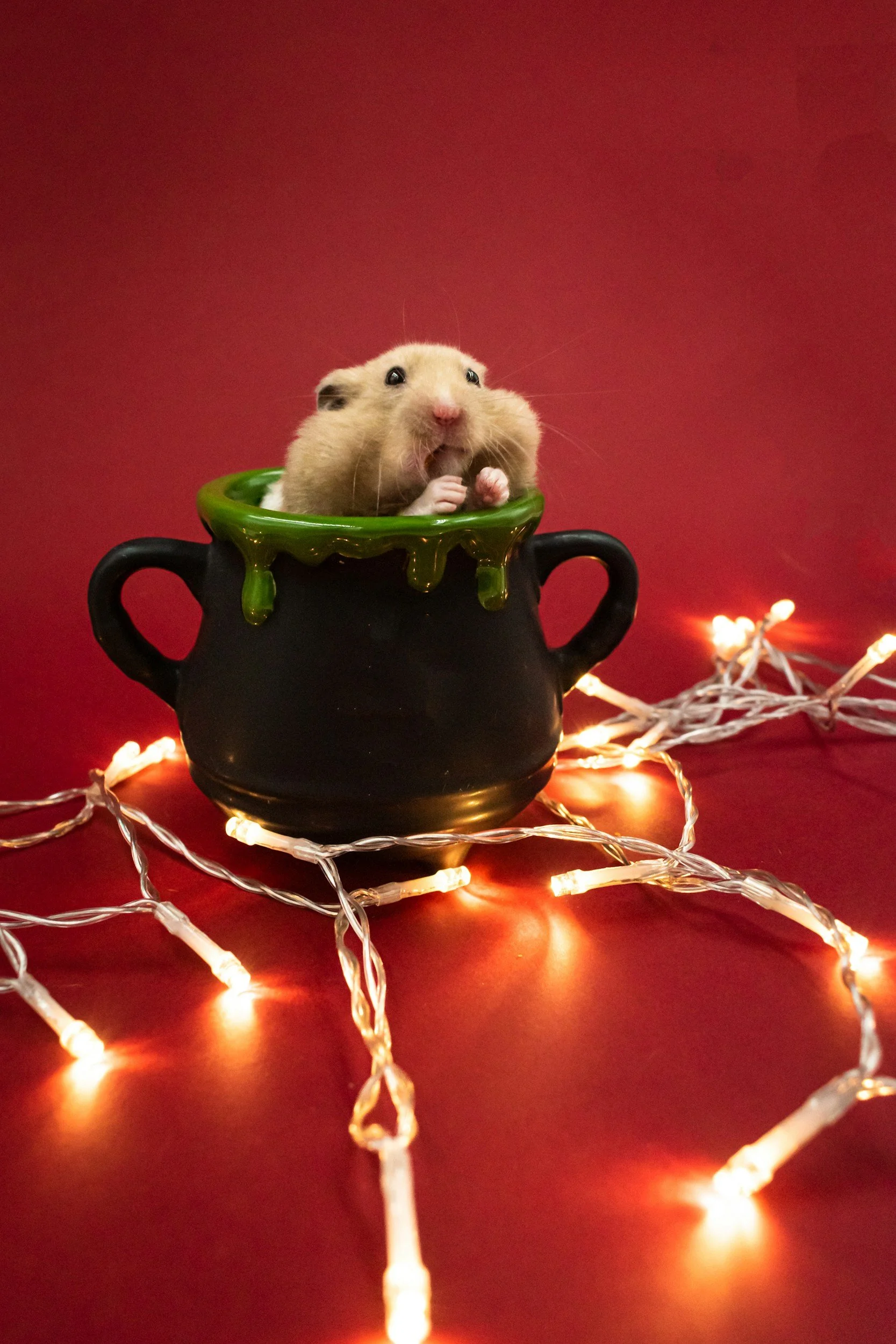
A mouse at Christmas